Why Are Leaderboards Becoming More Popular? Understanding Leaderboards, Lucky Draw & Reward System Trends
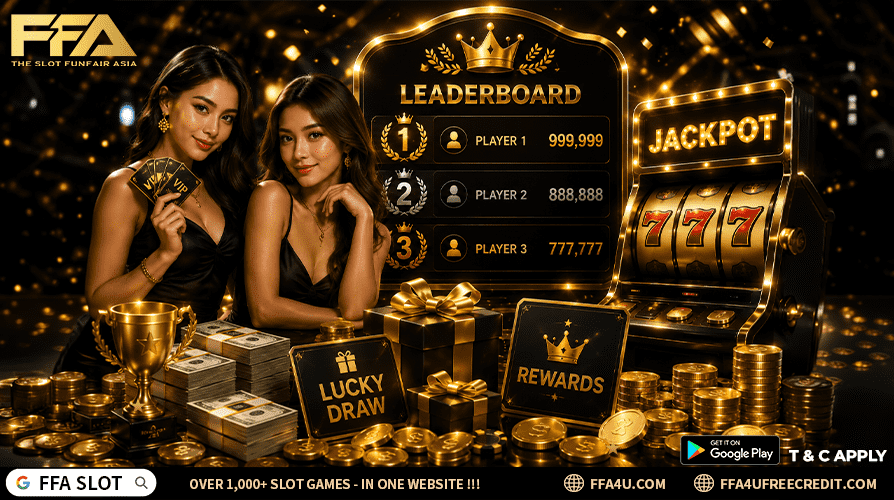
Introduction: Digital Entertainment Has Entered the Era of Continuous Participation
Over the past few years, competition among online entertainment platforms has largely focused on several obvious factors, such as:
- Number of games
- Visual quality
- Bonus Promotions
- Payment Systems
- Customer Support
All of these elements are still important today.
Namun begitu, menjelang tahun 2026, kebanyakan ciri ini sudah menjadi standard yang hampir semua platform perlu sediakan.
As the digital entertainment industry continues to mature, the biggest competitive advantage is no longer simply about offering more features.
Instead, the real difference now comes from delivering a higher-quality User Experience (UX) and building stronger long-term User Engagement.
In other words, a modern platform should no longer focus only on whether users successfully complete a single action.
It should continue asking much deeper questions.
Why do users decide to return?
What kind of experiences keep them interested over time?
Do leaderboards, community features and reward campaigns genuinely provide value to users?
Semakin banyak platform menyedari bahawa soalan-soalan ini kini menjadi asas kepada pembangunan produk digital yang berjaya.
Google has promoted similar ideas for many years through its User Experience (UX) design philosophy.
A successful digital platform is not simply one that allows users to finish an action quickly.
It should also ensure that every interaction feels clear, predictable, trustworthy and enjoyable enough that users naturally want to come back again.
Within Google Material Design and Android UX Guidelines, Google repeatedly highlights the importance of:
- Immediate Feedback
- Clear Goals
- Visibility of System Status
These design principles help users understand:
what the system is doing,
where they currently are,
and what they should do next.
Apabila pengguna sentiasa tahu apa yang sedang berlaku, mereka akan berasa lebih yakin menggunakan sesuatu platform.
This concept is now widely adopted across many successful digital products.
For example:
Duolingo uses streaks, XP points and daily missions to encourage continuous learning.
Strava motivates runners and cyclists using rankings, milestones and community challenges.
GitHub visualises developer contributions through activity graphs.
Salesforce Trailhead rewards learning progress using badges and achievement levels.
Although these products belong to completely different industries, they all share one important principle:
They continuously show users that progress is happening.
That visible progress becomes motivation.
Daripada hanya memberi ganjaran pada penghujung perjalanan, platform moden memberikan maklum balas sepanjang proses penyertaan.
This is also closely related to The Progress Principle, proposed by Harvard researcher Teresa Amabile.
The research suggests that one of the strongest sources of motivation comes from seeing meaningful progress—even when that progress is relatively small.
Every completed task...
Every additional point...
Every higher ranking...
Every unlocked badge...
creates another positive psychological signal that encourages users to continue.
Because of this, modern digital platforms are increasingly shifting away from one-time promotional campaigns.
Instead, they are building ecosystems that encourage users to participate continuously.
Examples include:
- Daily Missions
- Weekly Challenges
- Monthly Leaderboards
- Lucky Draw Campaigns
- Community Rewards
- Achievement Systems
- Seasonal Events
Semua aktiviti ini mempunyai satu matlamat yang sama:
To encourage users to return regularly rather than participate only once.
This shift is becoming increasingly visible throughout Malaysia's digital entertainment industry as well.
According to DataReportal Malaysia, Malaysians spend a significant amount of time online every day, with smartphones becoming the primary gateway for communication, entertainment and community interaction.
Meanwhile, reports from GSMA, MCMC, Deloitte and PwC also indicate that digital users increasingly expect personalised experiences, transparent systems and ongoing engagement rather than static online services.
These broader trends explain why Leaderboards, Lucky Draw systems and Community Rewards are no longer considered optional features.
Instead, they are becoming an essential part of modern digital platform design.
Why User Behaviour Is Changing: Participation Is Becoming More Important Than Winning
One of the biggest changes in digital entertainment is not the technology itself, but how users think and interact. Older platforms often followed a simple transactional journey: register, complete one activity, receive a reward and leave.
Modern users still value rewards, but they also enjoy the journey—tracking progress, comparing achievements, unlocking milestones, completing missions and participating in an active community.
Semua ini menjadikan pengalaman lebih menyeronokkan dan bermakna berbanding sekadar menunggu ganjaran terakhir.
Social Comparison Creates Direction
Social Comparison Theory, introduced by psychologist Leon Festinger, explains that people naturally evaluate their performance in relation to others. This does not always produce aggressive competition; it can simply provide a useful reference point.
“I am currently Rank 25. If I complete today’s mission, I may reach the Top 20.”
A leaderboard turns that comparison into visible information. Users can immediately see their current rank, collected points, weekly progress and distance to the next level.
Google’s UX guidance similarly recommends keeping system status visible. Clear feedback reduces uncertainty and helps users understand what to do next.
Visible Goals Encourage Continued Effort
The Goal Gradient Effect suggests that people often increase their effort as they move closer to a goal. A user who has completed 90% of a challenge is usually more motivated to continue than someone who has completed only 5%.
That is why effective platforms display:
- Progress bars and completion percentages
- Experience Points (XP) and achievement levels
- Countdown timers and mission streaks
- Clear requirements for the next milestone
Setiap elemen membantu pengguna merasakan bahawa sasaran mereka semakin hampir.
Earned Rewards Feel More Meaningful
Behavioural Economics also shows why earned rewards can feel more valuable than identical rewards given without effort. Completing missions before unlocking a badge, trophy or benefit gives the outcome personal meaning.
This principle appears across many products. Duolingo uses learning streaks, Spotify Wrapped turns listening history into a personal achievement, and Steam showcases seasonal events and profile achievements. Although the industries differ, the same idea remains: people enjoy seeing themselves improve.
For digital entertainment platforms in Malaysia, this creates an opportunity to build long-term participation through daily check-ins, weekly rankings, achievement badges, community milestones and loyalty levels.
The strongest systems therefore reward consistent participation, not only the final outcome. They transform occasional visits into habits while giving every interaction a clear sense of progress.
The Psychology Behind Leaderboards: Why Rankings Motivate People
Leaderboards have become one of the most recognisable features across modern digital platforms.
Whether in gaming, education, fitness, productivity or entertainment, ranking systems are everywhere.
This widespread adoption is not simply because rankings look attractive.
It is because they are deeply connected to human psychology.
Dalam dunia digital hari ini, manusia secara semula jadi ingin mengetahui kedudukan mereka berbanding orang lain.
A leaderboard immediately answers that question.
Instead of wondering how well they are doing, users can instantly see:
- Their current position
- Their recent progress
- The distance to the next rank
- How active the community is
- Whether they are improving over time
This immediate visibility creates a strong sense of direction.
Users no longer feel like they are participating blindly.
They understand exactly where they stand and what they need to do next.
In UX Design, this aligns closely with the principle of Clear Goal Orientation.
People stay engaged when objectives are visible, understandable and achievable.
Apabila matlamat jelas, pengguna lebih mudah membuat keputusan untuk terus aktif.
Leaderboards also introduce an important concept known as micro-achievement.
Large goals can sometimes feel intimidating.
For example:
"Reach Rank 1."
For most users, this objective may seem unrealistic.
However, smaller milestones feel much more achievable.
Examples include:
- Move from Rank 87 to Rank 70
- Enter the Top 50
- Reach the Top 20
- Maintain your weekly position
- Beat your previous personal record
Each of these smaller victories generates a sense of accomplishment.
Walaupun peningkatannya kecil, pengguna tetap merasakan kepuasan kerana mereka dapat melihat hasil usaha mereka secara langsung.
This continuous cycle of small achievements keeps motivation alive.
Instead of waiting weeks or months for one significant reward, users experience many positive moments throughout their journey.
Behavioural psychologists often describe this as continuous reinforcement.
Frequent positive feedback encourages repeated behaviour.
Rather than relying on one major incentive, the system provides regular signals that participation is worthwhile.
Google's UX recommendations similarly emphasise the importance of immediate feedback.
When users perform an action, they should receive a response quickly.
This response may appear as:
- Updated Points
- New Badge
- Higher Ranking
- Progress Animation
- Achievement Notification
These small interactions reassure users that their actions matter.
Maklum balas yang pantas membuatkan pengalaman terasa lebih responsif dan lebih menyeronokkan.
Another reason leaderboards are effective is that they provide social visibility.
People naturally enjoy sharing accomplishments.
Examples include:
"I reached Top 10."
"I completed this week's challenge."
"I earned the Gold Badge."
"I moved up twenty places today."
These achievements often become conversation starters inside communities.
Instead of creating unhealthy competition, well-designed leaderboards encourage positive participation.
Modern UX research suggests that successful ranking systems should motivate users without discouraging newcomers.
For this reason, many platforms divide rankings into multiple categories.
For example:
- Daily Rankings
- Weekly Rankings
- Monthly Rankings
- Beginner Rankings
- Regional Rankings
- Friends Rankings
Pendekatan ini menjadikan pertandingan lebih adil dan lebih menyeronokkan untuk semua pengguna.
New users can compete with people at a similar level instead of immediately facing experienced participants.
This reduces frustration while maintaining motivation.
Data Analytics also plays a significant role in designing effective leaderboard systems.
Rather than displaying random rankings, modern platforms analyse user behaviour to identify meaningful engagement patterns.
For example, platforms may monitor:
- Login Frequency
- Daily Activity
- Session Duration
- Community Participation
- Mission Completion Rate
- Returning User Percentage
These metrics help product teams understand whether the leaderboard is encouraging healthy engagement.
If users stop participating after reaching a certain rank, the ranking structure may need adjustment.
If users continue returning every week, the system is likely providing ongoing value.
Oleh sebab itu, leaderboard moden bukan sekadar paparan nombor, tetapi juga alat analitik yang membantu meningkatkan pengalaman pengguna secara berterusan.
Privacy Protection is another increasingly important consideration.
While public rankings can be motivating, users should always have confidence that their personal information remains protected.
Many platforms therefore display:
- Nicknames
- Partial User IDs
- Avatar Icons
- Anonymous Profiles
instead of revealing full personal identities.
This balance allows users to enjoy recognition while maintaining privacy and security.
Kepercayaan pengguna adalah asas kepada komuniti digital yang sihat dan mampan.
Ultimately, successful leaderboards are not designed merely to determine who is "the best."
Their real purpose is much broader.
They help users:
- Measure personal progress
- Stay motivated
- Build consistent habits
- Participate more frequently
- Feel connected to a wider community
As digital entertainment continues evolving in Malaysia and around the world, leaderboard systems will increasingly become tools for long-term engagement rather than simple competitive rankings.
Why Reward Campaigns & Lucky Draw Systems Drive Long-Term Engagement
As competition among digital entertainment platforms increases, a one-time promotion is rarely enough to sustain interest. Users increasingly expect to feel recognised throughout their journey, not only when they first register.
Continuous reward ecosystems create several reasons to return through daily missions, weekly challenges, monthly leaderboards, Lucky Draw campaigns, seasonal events, community milestones and loyalty rewards.
Dalam era digital sekarang, pengguna mahu rasa dihargai secara berterusan.
Variable Rewards Maintain Curiosity
Variable Reward Theory, associated with behavioural psychologist B.F. Skinner, helps explain why uncertain rewards can sustain more interest than receiving the same result every time.
If a daily activity always delivers an identical reward, excitement may gradually decline. When several transparent reward possibilities exist, anticipation increases because users want to discover what comes next.
This principle appears in mystery rewards, random bonus drops, Lucky Draw campaigns, surprise gifts and seasonal treasure events. The objective is not simply to distribute prizes, but to maintain emotional engagement without making the rules confusing.
Responsible systems should always communicate eligibility, timing, available rewards and selection rules clearly.
Lucky Draw Is About Participation, Not Just Luck
A well-designed Lucky Draw is broader than selecting a few winners. It gives regular activity a visible purpose: complete a mission, earn another entry, collect participation points or remain active during a campaign period.
This changes the user’s question from “Will I win today?” to “How can I improve my participation this week?” Every completed action has value even before the final result is known.
Walaupun pengguna belum memenangi hadiah utama, mereka masih dapat melihat nilai setiap penyertaan.
Gamification Makes Ordinary Activities Enjoyable
Gamification applies useful game-inspired mechanics to non-game activities. It is not about turning everything into a game; it is about making progress understandable and rewarding.
Common elements include:
- Experience Points (XP) and progress bars
- Achievement badges and unlockable rewards
- Daily streaks and structured missions
- Rankings and seasonal challenges
Together, these features provide clear objectives, visible progress and regular recognition. Users experience smaller successes throughout the journey instead of waiting for one distant reward.
Reward Data Improves Product Decisions
Reward systems also generate behavioural insights. Product teams can compare mission completion rates, campaign return rates and the points where users stop participating.
If weekly challenges consistently outperform monthly events, the monthly structure may be too complex. If community activities produce stronger retention than individual missions, future campaigns can place more emphasis on collaboration.
This behaviour-driven optimisation replaces assumptions with evidence and helps teams design more relevant experiences.
Community Rewards Build Shared Experiences
Community milestones, team challenges, referral achievements and seasonal goals transform individual actions into shared progress. Users are no longer interacting only with the platform; they are also celebrating with one another.
Active communities can strengthen satisfaction, trust and long-term loyalty, especially when platforms invest in moderation, user recognition, discussion spaces and positive contributor programmes.
Apabila komuniti menjadi lebih aktif, pengguna lebih cenderung untuk kembali kerana mereka merasakan adanya hubungan sosial.
The Future of Reward Systems
Future reward ecosystems will become more personalised. Instead of showing an identical campaign to everyone, platforms may adapt missions and benefits according to preferences, participation history, activity frequency and personal milestones.
AI and advanced analytics can support more relevant recommendations, but transparent rules and privacy protection must remain central. The future is not simply about giving away more prizes; it is about delivering more meaningful experiences.
Future Trends: AI, Personalisation & Community-Driven Digital Entertainment
The next generation of digital platforms will compete less through the size of a content library and more through the quality of the overall experience. Users increasingly expect services that are fast, relevant, secure, interactive and community-focused.
Instead of asking “What reward should every user receive?”, product teams are beginning to ask “What experience is most meaningful for this user?”
Artificial Intelligence Enables Relevant Experiences
AI can help recommend suitable missions, community discussions, seasonal campaigns and personal achievement goals. A highly active user may receive a different challenge from a newcomer, while community-oriented users may see more collaborative activities.
This approach is commonly known as hyper-personalisation. It combines behaviour, historical activity, preferences, device usage and engagement patterns to reduce irrelevant choices.
Industry research from Deloitte, PwC and Accenture consistently associates relevant personalisation with stronger satisfaction and engagement. However, AI should support user choice rather than remove it.
Personalisation Must Protect Privacy
Users expect transparency about how information is collected, stored and used. Privacy by Design addresses this expectation by building safeguards into the product from the beginning.
- Collect only the data that is genuinely needed
- Use secure authentication and storage
- Provide anonymous participation where appropriate
- Offer clear permission and preference controls
- Explain why recommendations or rewards are shown
Pengguna mahu mempunyai kawalan terhadap data mereka sendiri. Trust is essential to sustainable long-term engagement.
Communities Become Part of the Core Experience
Chatrooms, discussion forums, live events, user groups, achievement sharing and community challenges provide something that content alone cannot always deliver: a sense of belonging.
Connected users are more likely to return, share knowledge, celebrate achievements and invite friends. Community is therefore moving from an optional feature to a central part of the user journey.
Komuniti bukan lagi sekadar ciri tambahan; ia semakin menjadi nadi kepada pengalaman pengguna.
Healthy Communities Require Moderation
A valuable community must remain respectful, safe, inclusive and useful. Human moderators and AI-assisted tools can work together to reduce spam, identify harmful content and recognise positive contributors.
Automation should assist rather than replace human judgement, especially when context and cultural understanding are important.
Ethical Gamification Supports User Wellbeing
Future gamification will place greater emphasis on meaningful progress, transparent rules, fair reward distribution, balanced competition and optional participation.
Good engagement does not mean keeping users inside an application all day. It means delivering a positive, understandable experience whenever they choose to return.
Malaysia’s Digital Ecosystem Continues to Expand
High-speed mobile networks, cloud services, digital payments, AI and smartphone-first design continue changing how Malaysians access digital entertainment.
Reports from DataReportal, GSMA, MCMC and MDEC point to a population increasingly comfortable with digital services across work, communication, education and entertainment. As connectivity improves, expectations for speed, security and personalisation also rise.
The Future Is Experience-Driven
Users remember whether a platform makes them feel recognised, motivated, connected and safe. The strongest platforms will combine AI, personalisation, UX design, gamification, privacy protection, community building and data analytics into one coherent experience.
Technology will remain important, but the platforms that thrive will be those that give every interaction a purpose and every achievement a clear meaning.
Frequently Asked Questions (FAQ)
Why are leaderboards becoming increasingly popular across digital platforms?
Leaderboards provide users with visible progress, clear goals and continuous motivation.
Instead of participating without direction, users can immediately understand:
their current ranking,
how much progress they have made,
and what they need to do next.
Ini menjadikan pengalaman lebih jelas, lebih interaktif dan lebih menyeronokkan untuk pengguna.
Research in UX Design also suggests that visible feedback helps users remain engaged because they can clearly see the impact of every action they take.
Are Leaderboards only suitable for gaming platforms?
No.
Leaderboards are now widely used across many industries.
Examples include:
Education (Duolingo)
Fitness (Strava)
Software Development (GitHub)
Corporate Learning (Salesforce Trailhead)
Productivity Platforms
Community Platforms
Walaupun konsep ini berasal daripada permainan, kini ia digunakan dalam pelbagai sektor untuk meningkatkan motivasi dan penyertaan pengguna.
The core purpose is not competition alone.
It is to help users visualise progress and maintain long-term engagement.
Why do Lucky Draw campaigns encourage users to return?
A well-designed Lucky Draw campaign is not simply about selecting winners.
Instead, it encourages continuous participation.
Users often receive additional opportunities by:
completing missions,
participating regularly,
joining community activities,
or maintaining consistent engagement.
Setiap penyertaan memberi rasa bahawa usaha mereka mempunyai nilai walaupun keputusan akhir belum diketahui.
This ongoing participation helps create stronger long-term engagement compared with one-time promotional activities.
How does Gamification improve User Experience?
Gamification applies game-inspired mechanics to encourage participation.
Common examples include:
Progress Bars
Badges
Experience Points (XP)
Daily Missions
Achievement Systems
Seasonal Challenges
These features make ordinary activities feel more rewarding.
Daripada hanya menunggu ganjaran akhir, pengguna menikmati perjalanan menuju sasaran mereka.
This approach improves motivation while making digital experiences feel more interactive and meaningful.
Why is Community becoming more important than ever?
Modern users increasingly value interaction rather than consuming content alone.
Communities allow users to:
share experiences,
celebrate achievements,
exchange knowledge,
participate in discussions,
and build meaningful relationships.
Komuniti yang aktif juga membantu meningkatkan kepercayaan, kesetiaan dan pengalaman keseluruhan pengguna.
For many platforms, community engagement has become one of the strongest drivers of long-term retention.
Will Artificial Intelligence (AI) change future reward systems?
Yes.
Artificial Intelligence is expected to make digital experiences increasingly personalised.
Rather than showing identical rewards to every user, AI may recommend:
personalised missions,
suitable challenges,
relevant community activities,
achievement goals,
and customised reward opportunities.
Namun begitu, penggunaan AI juga perlu diseimbangkan dengan perlindungan privasi dan ketelusan terhadap pengguna.
Responsible AI should enhance the user experience while respecting individual privacy and user choice.
Conclusion
The rapid growth of Leaderboards, Lucky Draw campaigns and Reward Systems reflects a much larger transformation happening across the digital entertainment industry.
Modern platforms are no longer designed simply to deliver content or distribute promotions.
Instead, they are evolving into complete digital ecosystems that encourage participation, recognise progress and strengthen long-term relationships with their communities.
Hari ini, pengalaman pengguna menjadi faktor yang jauh lebih penting berbanding sekadar menawarkan lebih banyak ciri atau ganjaran.
Users increasingly appreciate platforms that help them:
understand their progress,
achieve meaningful goals,
participate regularly,
connect with others,
and enjoy a transparent, trustworthy experience.
Leaderboards provide visible motivation.
Reward Systems create continuous participation.
Lucky Draw campaigns encourage consistent engagement.
Communities strengthen relationships.
Artificial Intelligence enables more personalised experiences.
Meanwhile, Privacy Protection, Ethical Gamification and Community Moderation ensure that these systems remain sustainable and user-focused.
Kesemua elemen ini saling melengkapi dalam membentuk pengalaman digital yang lebih berkualiti untuk masa hadapan.
As Malaysia's digital ecosystem continues to expand through faster connectivity, mobile-first experiences and growing community engagement, platforms that prioritise meaningful user experiences will be better positioned to succeed.
The future of digital entertainment is therefore not defined solely by technology.
It is defined by how effectively platforms help users feel recognised, motivated, respected and connected.
Ultimately, the most successful digital platforms will not simply attract visitors.
They will build communities.
They will encourage progress.
They will reward participation.
And most importantly, they will create experiences that users genuinely want to return to—again and again.